What Makes Surround Sound Speakers Worth Buying?
A surround speaker upgrade is worth buying when it improves immersion without creating new setup problems. The biggest gains usually come from clearer directional effects, smoother movement between speakers, and better balance at normal listening levels. You do not need the largest or most expensive models to hear those benefits; placement, receiver compatibility, and room size often matter just as much.
The trade-off is that surround speakers serve a different purpose from the front pair. Compact satellites may fit neatly beside a sofa, while bookshelf or floorstanding speakers can deliver fuller sound but require more space and careful positioning. A sensible choice matches the room and existing system first, then considers sound quality, appearance, installation effort, and total cost.
Start With Your Room and Existing System
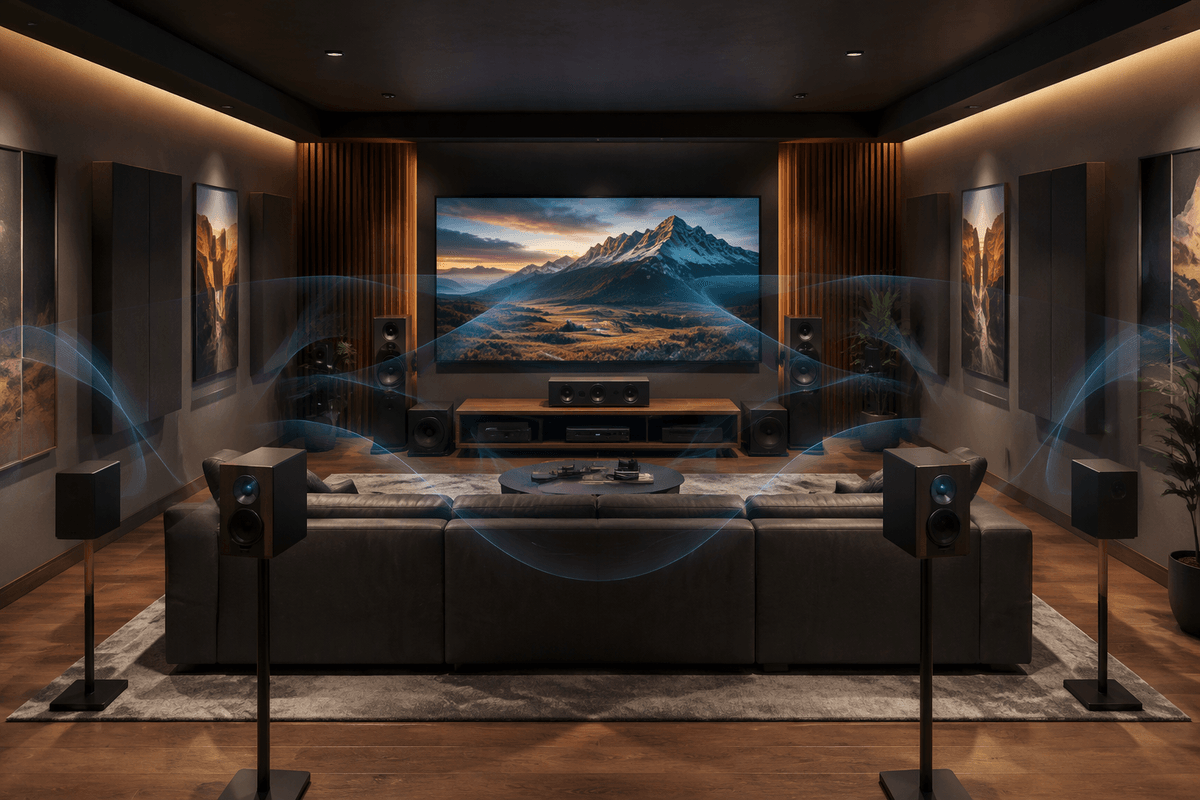
Begin with the room, because a speaker that sounds excellent in a showroom may be awkward or excessive at home. Measure the distance between the main seating position and the walls, note where furniture blocks placement, and check whether speaker stands, wall mounts, or ceiling installation are realistic. A small room often benefits from compact satellites, while a larger or open-plan space may need bookshelf speakers with greater output and flexibility.
Then check the existing system before comparing models. Confirm that your AV receiver or sound processor has enough channels, supports the intended surround format, and provides suitable connections. Passive speakers need amplifier power, while many wireless options still require a compatible hub, power outlet, or brand-specific ecosystem. Sensitivity and impedance should also be reasonably close to the receiver’s capabilities. Replacing only the surround pair can improve effects, but mismatched tonal balance may make sounds shift noticeably as they move around the room. Factor in cables, mounts, stands, and possible receiver upgrades, since those costs can change which speaker choice offers the best overall value.
Satellite, Bookshelf, or Floorstanding Speakers?
Satellite speakers are the easiest choice when space, appearance, or mounting flexibility matters most. Their small cabinets work well beside or behind a sofa, and they usually place less demand on the receiver. The compromise is limited bass and lower maximum output, although that matters less when a subwoofer handles low frequencies. They suit compact rooms and systems where surround channels mainly add ambience and directional effects.
Bookshelf speakers offer a stronger middle ground. Their larger drivers can produce fuller dialogue, music, and effects, while still fitting on stands or sturdy shelves. They need more room and may require careful placement to avoid blocking walkways or sitting too close to walls. For many medium-sized theaters, they provide the best balance of detail, output, and cost.
Floorstanding speakers make sense when the surround channels must fill a large room or support serious music listening, but they are rarely necessary for typical rear effects. They occupy substantial floor space, cost more, and can overpower a small room. Choose them only when their added scale will be used regularly, not simply because larger cabinets appear more capable.
Which Speakers Matter Most for Movies?

For movies, the center speaker usually deserves the highest priority because it carries most dialogue and anchors voices to the screen. A weak or poorly placed center can make speech sound thin, uneven, or difficult to understand, even when the surround channels are impressive. The left and right front speakers matter next, handling music, effects, and sounds that move across the screen. They should be tonally matched with the center so a voice or vehicle does not change character as it moves between channels.
Surround speakers still shape the sense of space, but they usually contribute less continuous content. Compact models can perform very well with ambient effects, crowd noise, rain, and directional movement, especially when a capable subwoofer handles deep bass. The subwoofer itself may produce a larger change than upgrading rear speakers, adding weight to explosions, scores, and low-frequency atmosphere. The practical limitation is budget: improving the center, front pair, and subwoofer first may leave less money for premium surrounds. For movie-focused systems, prioritize clear dialogue, matched front speakers, and controlled bass before choosing oversized rear cabinets.
Wired or Wireless Surround Speakers?
Wired surround speakers remain the safest choice when sound quality, reliability, and broad receiver compatibility matter most. A speaker cable carries the signal directly from the AV receiver, so there is no wireless compression, pairing process, or concern about interference. The drawback is installation: cables may need to run along walls, under rugs, through conduit, or inside the ceiling. Stands and wall mounts can add further cost and visual clutter.
Wireless surrounds reduce that installation burden, but they are not always truly wireless. Most still need power outlets, and many depend on a matching hub, transmitter, or speaker ecosystem. Compatibility can be limited, especially if you plan to use a different receiver or upgrade brands later. Wireless links may also introduce occasional dropouts or setup delays in crowded networks, although a well-designed system can perform reliably for normal movie listening.
Choose wired speakers for a permanent theater, long-term flexibility, or high-volume listening. Wireless models are more practical when running cable would damage the room or when a clean appearance matters more than maximum upgrade freedom. Compare the complete setup cost, including hubs, power cables, mounts, and installation—not just the speaker price.
Match Speakers to Your Listening Habits
A listener who mainly watches action films may value controlled output and precise placement more than rich musical detail. Compact surrounds can reproduce flyovers, room ambience, and sudden effects convincingly when crossed over to a subwoofer, while larger bookshelf speakers provide more headroom for loud sessions and wider dynamic swings. If you watch quietly at night, sensitivity and tonal smoothness may matter more than maximum volume, since an efficient speaker can sound lively without pushing the receiver hard.
Music and concert videos change the priorities. Full-range bookshelf speakers can make rear channels sound less like occasional effects and more like part of a continuous performance. They are also useful for multichannel music, where tonal differences become easier to notice. However, that extra capability brings higher cost, greater space requirements, and potentially more bass overlap with the subwoofer. If the surrounds are used only for movies, paying for large cabinets may produce little audible benefit.
Consider how often you listen, how loudly you play content, and whether the speakers will serve music as well as films. The best match is not the model with the broadest specifications; it is the one that delivers enough output and tonal consistency for your habits without exceeding the room, receiver, or budget.
Choose the System You Can Set Up Correctly
The best surround system is the one you can place, connect, and calibrate properly. A less expensive bookshelf pair positioned at the correct height will usually outperform larger speakers squeezed behind furniture or aimed away from the seating area. Leave enough room for speaker stands, cable runs, power connections, and access to the receiver before committing to a model.
Also allow time for setup. Correct distances, channel levels, crossover settings, and room correction can make a greater difference than a modest speaker upgrade. If installation is difficult, choose smaller wired speakers or a compatible wireless system rather than abandoning ideal placement. Judge the complete package—speakers, accessories, installation effort, and future flexibility—then choose the option that fits your room and can be configured consistently.